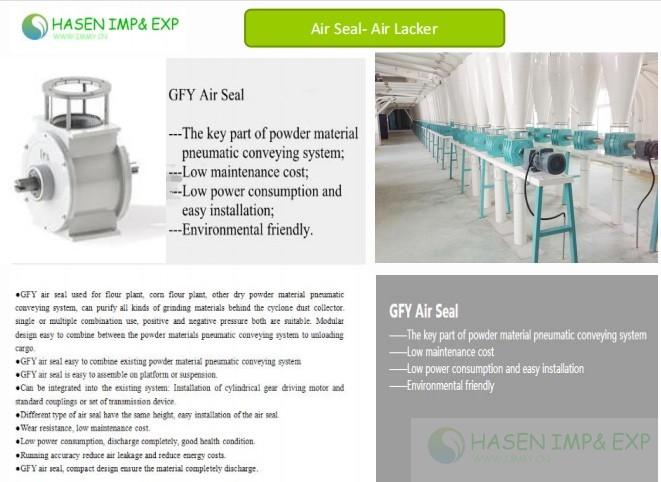
Air lock valves,composed of Steel structure in spheroidal cast iron and inner rotor with no welding. Excellent for separating the aspired product from pneumatic air:www.immyhitech.com
AIR LOCK
Air-lock valves, composed of steel structure in spheroidal cast iron and inner rotor with no welding. Excellent for separating the aspired product from pneumatic air. Thanks to high coupling precision, permits very reduced air dispersion. Can be coupled with glass spyholes and small cyclone scrubbers, or used alone for various needs. www.immy.cn / www.immyhitech.com
Technical features:
Painted spheroidal cast iron structure, processed in internal work centres.
Painted, carbon steel rotor, with centre star
Rectified, outer rotor edges to guarantee excellent coupling with the static body
No inner welding enabling perfect cleaning
PNEUMATIC AIRLOCK
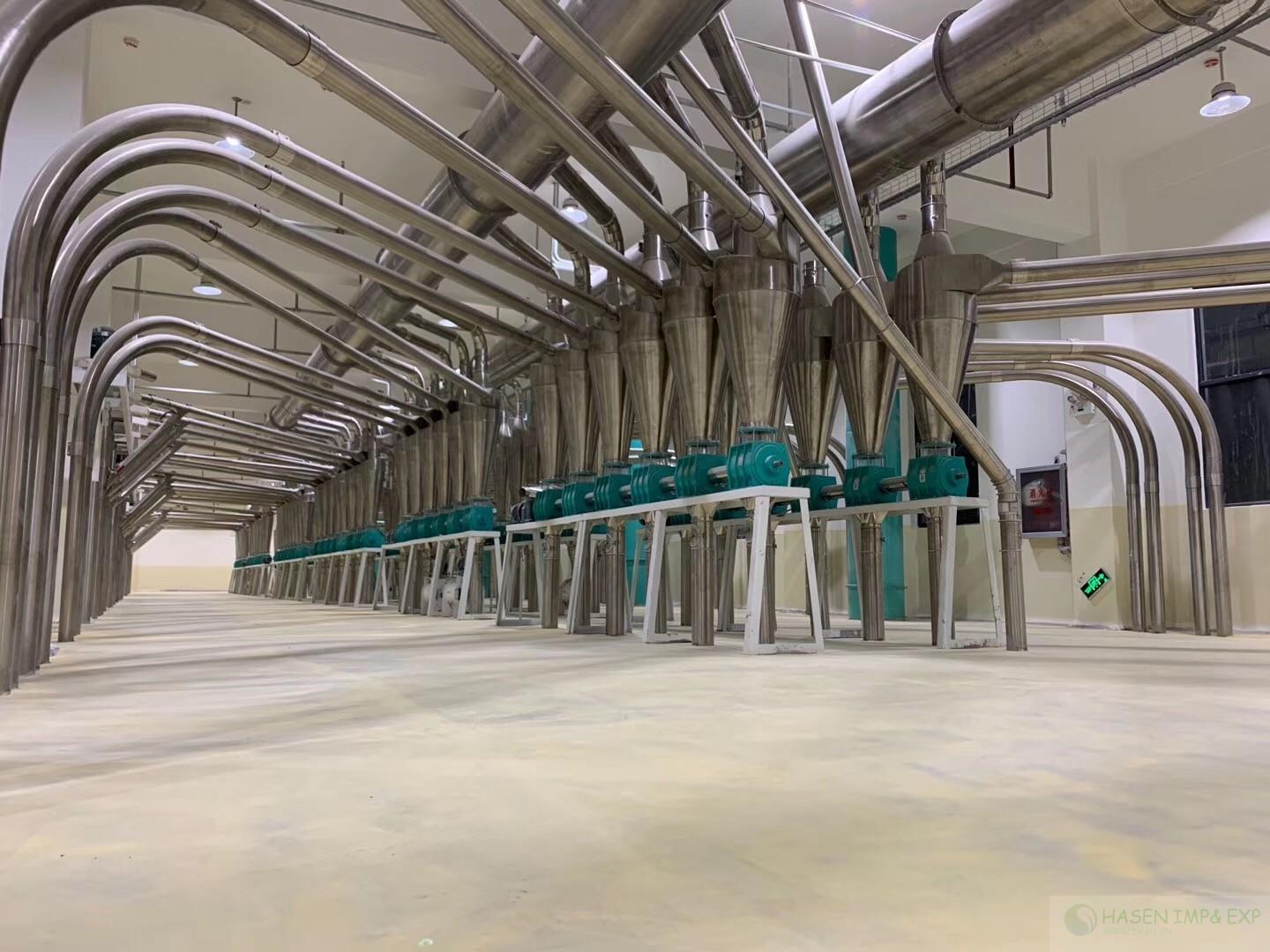
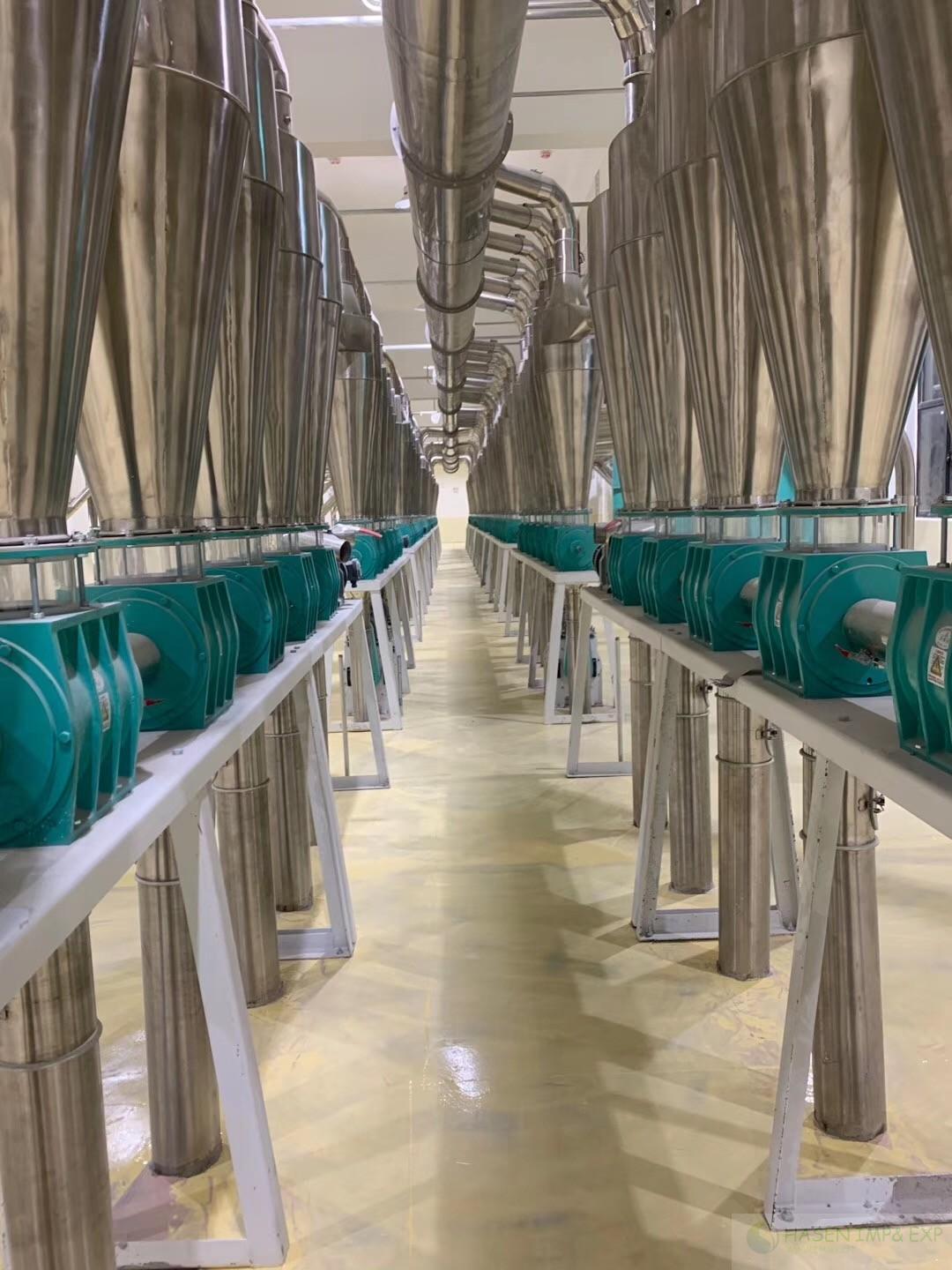
Airlocks are normally installed below the cyclones or jet filters. They are made of special cast iron material to ensure perfect tightness. They are designed for discharging mill stock, filter dust in the food processing industry, and feeding materials such as grain, break stock, semolina, flour or other similar material from pneumatic conveying lines.
POSITIVE AIRLOCK
Airlock material flow rate into a positive-pressure conveying pipe line which is then transported away by air. This airlock type is widely used as a feeder device in a positive-pressure conveying system for flour, bran, starch, grain, feed, sugar, chemical, plastic granular materials. There is an axial discharging groove beneath the airlock casing which serves for the conveying operation.
Valve including a sight glass. Also available with motor
TWO WAY VALVE
Two way valve SSLF is utilized to divert product at different points within a positive pressure blowline to a target bin. The valve design allows direction changes during product transfer using a cylindrical formed diverter gate can be moved pneumatically to the desired position. The diverter gate is fitted with two limit switches and a solenoid valve.The unit consists of a cast iron body, diverter plug of spherical graphite iron, sealing countersunk flanges with pneumatically operated cylinder for position change, elbow adapter with flange seals.
Frequently Asked Questions (FAQ) About Air-Lock Valves
Steel Structure in Spheroidal Cast Iron with Inner Rotor (No Welding)
1. What is an air-lock valve?
An air-lock valve, also known as a rotary airlock or rotary valve, is a mechanical device used to control the flow of bulk materials between two areas with different pressure conditions. Its primary function is to discharge material while maintaining an air seal, preventing pneumatic air from escaping or entering the system. Air-lock valves are essential components in pneumatic conveying systems, dust collection systems, and material handling processes.
2. What is the main purpose of an air-lock valve in pneumatic conveying systems?
The key purpose of an air-lock valve is to separate the aspired product from pneumatic air. In pneumatic conveying, materials such as powders, granules, or pellets are transported using airflow. The air-lock valve ensures that the product is discharged efficiently without losing air pressure, maintaining system efficiency, reducing energy consumption, and preventing contamination or backflow.
3. What materials are used in high-quality air-lock valves?
High-performance air-lock valves are typically composed of:
Steel structure housing
Spheroidal cast iron (ductile iron) body
Inner rotor manufactured without welding
This combination ensures excellent mechanical strength, dimensional stability, wear resistance, and long service life, even under harsh industrial conditions.
4. Why is spheroidal cast iron used in air-lock valve construction?
Spheroidal cast iron, also known as ductile iron, offers superior properties compared to standard cast iron:
High tensile strength
Excellent impact resistance
Good corrosion resistance
Superior wear performance
When used in air-lock valves, spheroidal cast iron provides robust sealing performance and maintains structural integrity under continuous operation and pressure variations.
5. What are the advantages of a steel structure air-lock valve?
A steel structure air-lock valve provides:
Enhanced rigidity and strength
Improved resistance to deformation under pressure
Longer operational lifespan
Stable performance in high-load and high-temperature environments
Steel structures combined with spheroidal cast iron bodies ensure consistent performance in demanding industrial applications such as cement, chemical processing, and power generation.
6. Why is an inner rotor with no welding important?
An inner rotor manufactured without welding offers several critical advantages:
Higher structural integrity: No weld seams that may crack or fail over time
Improved balance and precision: Reduces vibration and wear
Superior sealing performance: Uniform rotor surfaces enhance air tightness
Extended service life: Ideal for continuous-duty operations
Non-welded rotors are especially important in applications where precision air separation and material consistency are required.
7. How does an air-lock valve separate aspired product from pneumatic air?
The air-lock valve uses a rotating rotor with multiple pockets. As material enters the valve, it fills the rotor pockets. When the rotor turns, the material is carried to the outlet and discharged, while the tight clearances between the rotor and housing prevent air from passing through. This design ensures effective separation of product from pneumatic air, maintaining pressure balance and system efficiency.
8. What industries commonly use air-lock valves?
Air-lock valves composed of steel structure and spheroidal cast iron are widely used in:
Cement and building materials
Food and grain processing
Chemical and pharmaceutical industries
Power plants and biomass systems
Mining and metallurgy
Plastic and polymer processing
These industries require reliable air sealing and accurate material dosing.
9. Are these air-lock valves suitable for abrasive materials?
Yes. Thanks to the use of spheroidal cast iron and steel structure, these air-lock valves are well-suited for handling abrasive materials such as cement powder, fly ash, sand, and minerals. The non-welded inner rotor further enhances durability by reducing weak points susceptible to erosion.
10. How do air-lock valves improve system efficiency?
Air-lock valves improve system efficiency by:
Minimizing air leakage
Maintaining stable pressure conditions
Reducing energy loss
Preventing material blow-back
Enhancing overall pneumatic conveying performance
Efficient air separation leads to lower operational costs and improved productivity.
11. What maintenance is required for steel structure air-lock valves?
Maintenance requirements are relatively low. Recommended practices include:
Periodic inspection of rotor and housing clearances
Lubrication of bearings and drive components
Monitoring wear on seals and internal surfaces
Cleaning to prevent material buildup
Due to the robust materials and non-welded rotor design, these air-lock valves typically require less frequent maintenance than conventional models.
12. Can these air-lock valves operate continuously?
Yes. Air-lock valves with steel structure, spheroidal cast iron bodies, and non-welded inner rotors are designed for continuous-duty operation. Their construction ensures stable performance over long periods, even in high-throughput and high-pressure environments.
13. Are air-lock valves customizable?
Many manufacturers offer customization options such as:
Different rotor pocket sizes
Variable inlet and outlet configurations
Surface treatments for enhanced wear resistance
Drive options including direct drive or chain drive
Customization ensures the air-lock valve meets specific process and material requirements.
14. What factors should be considered when selecting an air-lock valve?
Key selection factors include:
Material characteristics (abrasive, sticky, fine powder)
Operating pressure and temperature
Required throughput
Air sealing requirements
Installation environment
Choosing a valve with a steel structure, spheroidal cast iron body, and non-welded rotor ensures long-term reliability.
15. Why are air-lock valves critical for dust control systems?
In dust collection systems, air-lock valves prevent dust-laden air from escaping while allowing collected material to be discharged safely. This helps maintain negative pressure, protects downstream equipment, and ensures compliance with environmental and safety regulations.
Conclusion
Air-lock valves composed of steel structure in spheroidal cast iron with an inner rotor and no welding represent a high-performance solution for modern pneumatic conveying and material handling systems. Their ability to efficiently separate the aspired product from pneumatic air, combined with exceptional durability, low maintenance requirements, and reliable air sealing, makes them an ideal choice for a wide range of industrial applications.
For professional solutions, technical support, and high-quality air-lock valves designed to meet demanding industrial standards, please contact WUXI HASEN at www.immyhitech.com.



 Call us:
.png "Air-lock valves, composed of Steel structure in spheroidal cast iron and inner rotor with no welding. Excellent for separating the aspired product from pneumatic air:www.immyhitech.com.jpg")
.png "Air-lock valves, composed of Steel structure in spheroidal cast iron and inner rotor with no welding. Excellent for separating the aspired product from pneumatic air:www.immyhitech.com.jpg")
.png)
.png "Air-lock valves, composed of Steel structure in spheroidal cast iron and inner rotor with no welding. Excellent for separating the aspired product from pneumatic air:www.immyhitech.com.jpg")
.png "Air-lock valves, composed of Steel structure in spheroidal cast iron and inner rotor with no welding. Excellent for separating the aspired product from pneumatic air:www.immyhitech.com.jpg")
.png "Air-lock valves, composed of Steel structure in spheroidal cast iron and inner rotor with no welding. Excellent for separating the aspired product from pneumatic air:www.immyhitech.com.jpg")
.jpg "Air-lock valves, composed of Steel structure in spheroidal cast iron and inner rotor with no welding. Excellent for separating the aspired product from pneumatic air:www.immyhitech.com.jpg")
.png "Air-lock valves, composed of Steel structure in spheroidal cast iron and inner rotor with no welding. Excellent for separating the aspired product from pneumatic air:www.immyhitech.com.jpg")
.png "Air-lock valves, composed of Steel structure in spheroidal cast iron and inner rotor with no welding. Excellent for separating the aspired product from pneumatic air:www.immyhitech.com.jpg")
 Wuxi Hasen sales