Two-way Valve
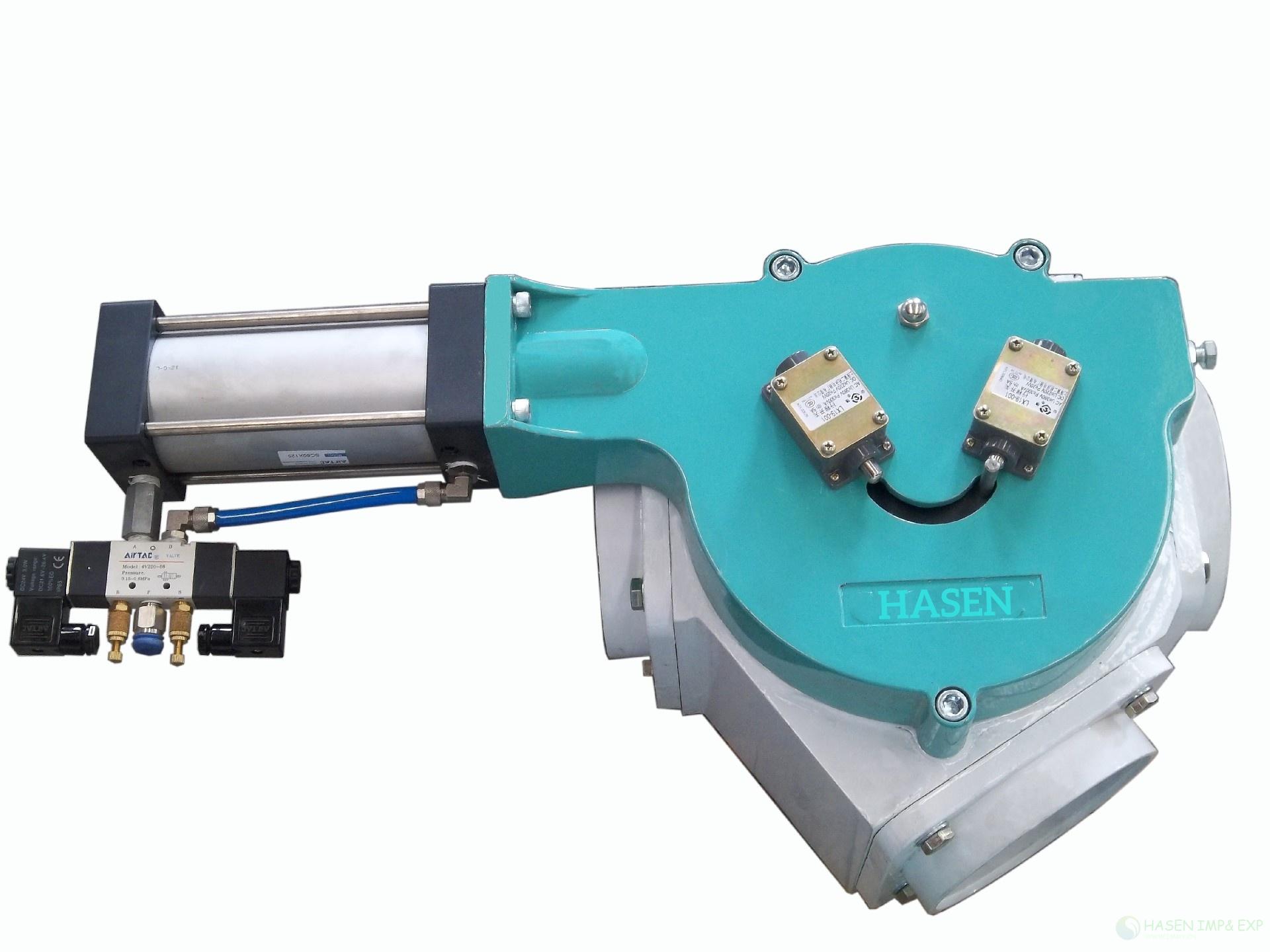
THFX Series Plug-Type Directional Control Valves Widely used in the flour, bran, starch, and grain industries, as well as in the feed, sugar, chemical, and plastics industries, for the positive and negative pressure, low-speed conveyance of powdered and granular materials and for switching the direction of material flow.: www.immyhitech.com
Features
Application:
THFX plug change valve(two-way valve) is mainly used in switching the material direction in pneumatic conveying system.It can change the pipe material
direction in the flow state without having to interrupt feeding and air supply,the material will be sent to the two selected location.If a number of valves are
combined,the material can be conveying to many selected locations,so the operation is very convenient to use.It can be widely used in changing the
conveying direction for flour,bran,starch,grain,feed,sugar,chemical products,plastic powder materials during positive and negative pressure transmission
and low-speed transmission pipeline,it make materials send to the selected locations.
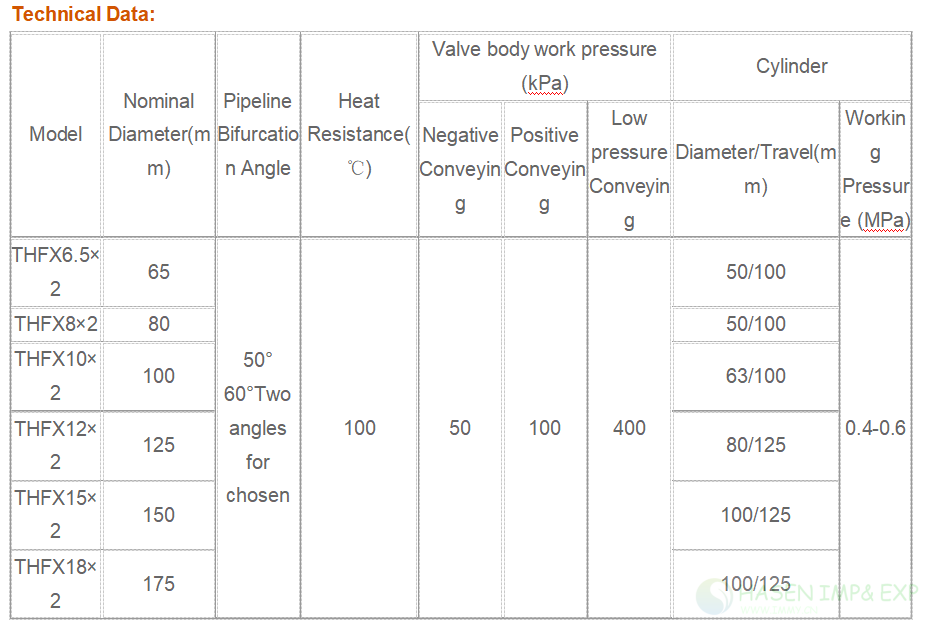
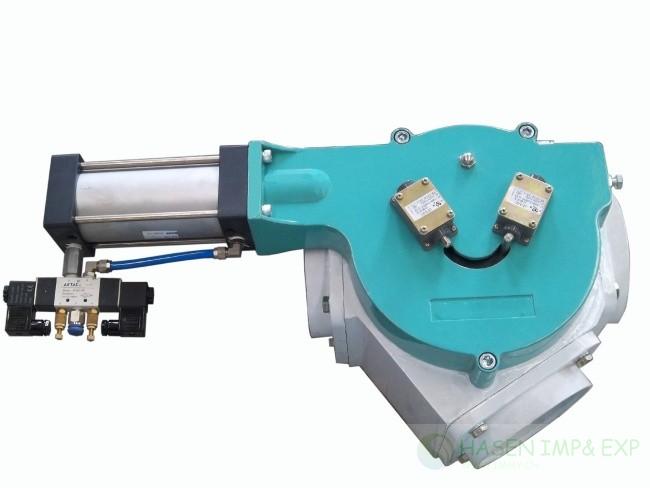
Two-way Valve mainly used in switching the material direction in pneumatic conveying system:www.immyhitech.com
THFX Series Plug-Type Directional Control Valves Widely used in the flour, bran, starch, and grain industries, as well as in the feed, sugar, chemical, and plastics industries, for the positive and negative pressure, low-speed conveyance of powdered and granular materials and for switching the direction of material flow.
FAQ: Two-way Valve Mainly Used in Switching the Material Direction in Pneumatic Conveying System
1. What is a Two-way Valve in a pneumatic conveying system?
A Two-way Valve mainly used in switching the material direction in pneumatic conveying system is a mechanical device designed to divert bulk materials from one conveying pipeline to another. It allows powdered, granular, or pelletized materials to be redirected efficiently without stopping the pneumatic conveying process.
This type of valve is widely applied in industries such as cement, power plants, chemicals, food processing, plastics, metallurgy, and building materials, where flexible material routing is required.
2. What is the main function of a Two-way Valve in pneumatic conveying?
The primary function of a Two-way Valve mainly used in switching the material direction in pneumatic conveying system is to control and change the flow direction of conveyed materials. By opening one outlet while closing another, the valve ensures that material is transported to the correct silo, hopper, reactor, or packaging line.
This switching capability improves production efficiency, reduces downtime, and allows one conveying line to serve multiple destinations.
3. How does a Two-way Valve work in a pneumatic conveying system?
A Two-way Valve mainly used in switching the material direction in pneumatic conveying system typically operates using pneumatic or electric actuators. When activated, an internal diverter plate or rotating body aligns with one outlet path while sealing the other.
The valve must maintain:
These features ensure stable conveying pressure and prevent material accumulation or pipeline blockage.
4. What materials can be handled by a Two-way Valve?
A Two-way Valve mainly used in switching the material direction in pneumatic conveying system is suitable for a wide range of bulk materials, including:
Fly ash
Cement
Lime powder
Alumina
Plastic pellets
Grain and food powders
Chemical powders
Mineral dust
The valve body and sealing materials can be customized based on abrasion resistance, corrosion resistance, and temperature requirements.
5. What are the advantages of using a Two-way Valve in pneumatic conveying systems?
Using a Two-way Valve mainly used in switching the material direction in pneumatic conveying system offers multiple advantages:
Flexible material routing without stopping production
High sealing performance to maintain system pressure
Reduced system complexity by replacing multiple pipelines
Lower maintenance costs
Improved operational safety
These advantages make two-way valves a critical component in modern automated conveying systems.
6. What industries commonly use Two-way Valves?
A Two-way Valve mainly used in switching the material direction in pneumatic conveying system is widely used in:
Cement plants
Thermal power stations
Chemical processing plants
Food and pharmaceutical industries
Plastic and polymer manufacturing
Metallurgical and mining industries
Any industry requiring accurate and reliable material flow direction control can benefit from this valve.
7. What is the difference between a Two-way Valve and a Diverter Valve?
While often used interchangeably, a Two-way Valve mainly used in switching the material direction in pneumatic conveying system specifically refers to a valve with one inlet and two outlets. Its main task is directional switching.
A diverter valve may include:
Two-way valves are preferred for simpler layouts where reliability and fast switching are essential.
8. What factors should be considered when selecting a Two-way Valve?
When choosing a Two-way Valve mainly used in switching the material direction in pneumatic conveying system, consider the following factors:
Material characteristics (abrasive, sticky, corrosive)
Conveying pressure and temperature
Required sealing performance
Actuation method (pneumatic or electric)
Installation space and pipeline diameter
Proper selection ensures long service life and stable system operation.
9. How does sealing performance affect pneumatic conveying efficiency?
Sealing performance is critical for a Two-way Valve mainly used in switching the material direction in pneumatic conveying system. Poor sealing can cause air leakage, pressure loss, and material backflow, leading to reduced conveying efficiency.
High-quality two-way valves use:
Precision-machined sealing surfaces
Wear-resistant sealing materials
Optimized internal geometry
These features help maintain consistent airflow and prevent system disruptions.
10. Can Two-way Valves be customized?
Yes. A Two-way Valve mainly used in switching the material direction in pneumatic conveying system can be customized according to customer requirements, including:
Customization ensures compatibility with different pneumatic conveying systems.
11. How is a Two-way Valve installed in a pneumatic conveying system?
Installation of a Two-way Valve mainly used in switching the material direction in pneumatic conveying system is straightforward. It is typically mounted inline between conveying pipelines using flanged or welded connections.
Correct installation ensures:
Professional installation and commissioning are recommended for optimal performance.
12. What maintenance is required for a Two-way Valve?
Routine maintenance for a Two-way Valve mainly used in switching the material direction in pneumatic conveying system includes:
Periodic inspection of seals
Checking actuator operation
Cleaning internal material buildup
Monitoring wear parts
With proper maintenance, two-way valves can operate reliably for many years.
13. Why is a Two-way Valve essential in modern pneumatic conveying systems?
A Two-way Valve mainly used in switching the material direction in pneumatic conveying system plays a vital role in automation and material handling efficiency. It allows a single conveying system to serve multiple production lines or storage units, significantly reducing investment costs and improving operational flexibility.
Conclusion and Contact Information
In summary, the Two-way Valve mainly used in switching the material direction in pneumatic conveying system is a key component for efficient, flexible, and reliable bulk material handling. Its robust design, excellent sealing performance, and adaptability make it indispensable across many industries.
For professional solutions, reliable quality, and customized designs of Two-way Valve mainly used in switching the material direction in pneumatic conveying system, please contact WUXI HASEN.
Website: www.immyhitech.com



 Call us:
 Wuxi Hasen sales